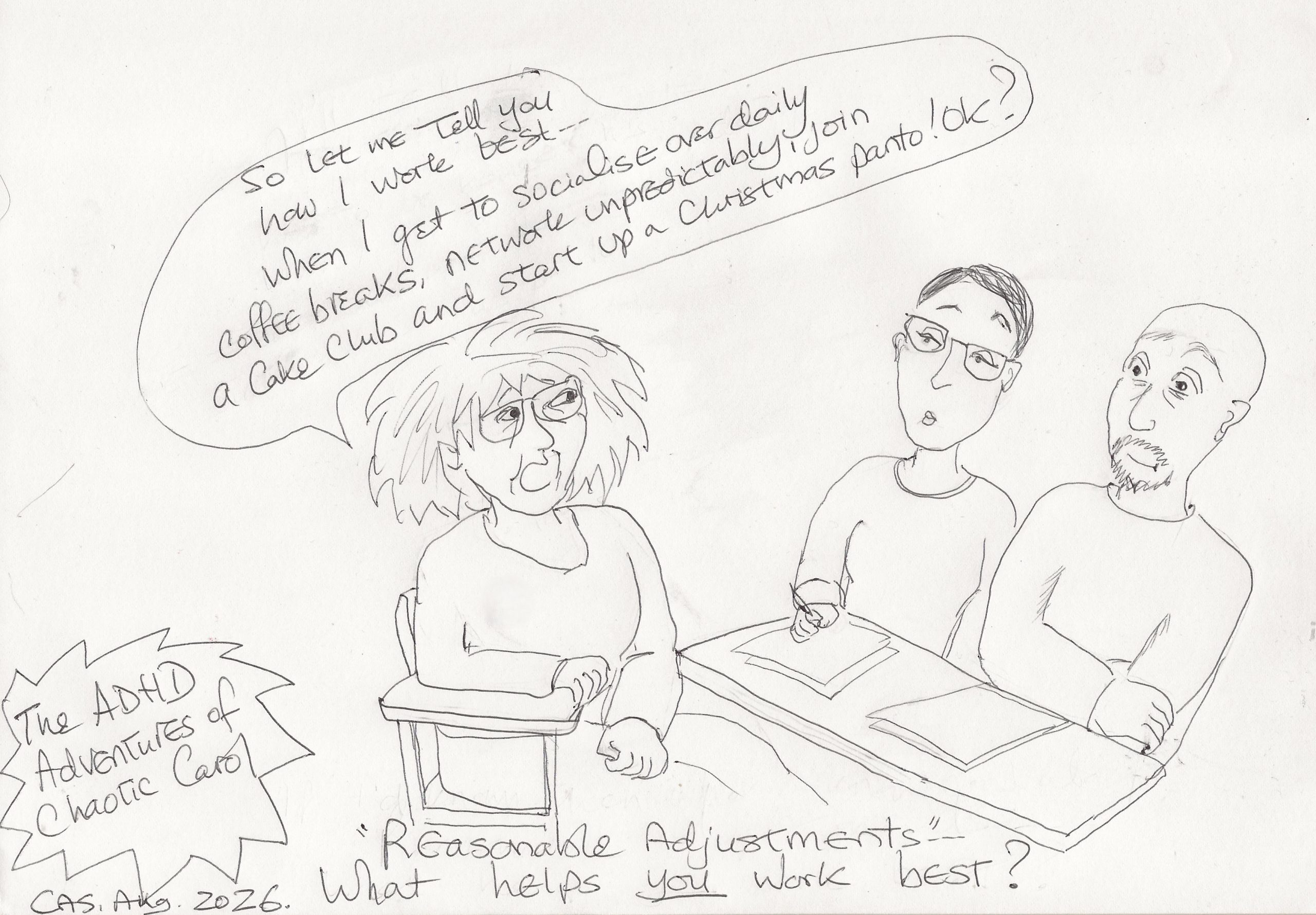
The best workplace contribution I ever made was starting a staff Christmas panto.
As ADHDers, we bring unique gifts and often work in sprints rather than marathons. We spring awake with brilliant 3:00AM ideas, but may struggle with routine admin, like my personal record of taking nine months to submit an expenses claim.
Traditional workplaces weren’t designed for neurodivergent brains. Asking for ‘reasonable adjustments’ can feel like we are being ‘difficult’, especially if we aren’t sure what to request. But we almost always know what hasn’t worked.
Looking back over 40 years in community and heritage work, my most meaningful contributions weren’t standard tasks. But when allowed to be creative and spontaneous, I left lasting legacies. In two hierarchical national organisations, my panto projects brought together staff across every department – from security guards to the Chief Executive. They broke down silos, improved cross-departmental collaboration, revitalised our Christmas parties – and may even have helped smooth a complex organisational merger.
These outcomes came directly from my (then unconscious) ADHD strengths, yet they were sometimes met with criticism or micro-management from bosses who didn’t see the value. You might know the feeling.
To work out what adjustments you need today, look at what previously brought out your best – and worst.
Think of a time when a task felt manageable and effortless. What were the factors behind it? Or… what were the quiet signs and triggers that led to burnout? These are the clues we need.
- For task initiation: Would agreed micro-deadlines and friendly check-ins help you hit major project goals?
- For tedious tasks: Would body doubling with a colleague – in person or digitally – keep you focused?
- For clarity: If open-ended expectations leave you floundering, would written instructions and swift meeting recaps provide useful structure?
- For sensory overload: If open-plan noise drains your energy, could noise-cancelling headphones, flexible hours or negotiated “deep focus” time/space help?
I needed the freedom to build creative alliances, along with actual tea breaks to get out and socialise – rather than succumbing to office “presenteeism.” I also craved the flexibility to work from home when I needed deep concentration away from fascinating background chatter. I could also have done with a Neurodiversity-informed employer, though that was rare at the time.
Some workplaces are less adjustable than others, of course. But reasonable adjustments are not about asking for special favours or privileges. They usually cost very little, rarely harm colleagues and often improve the environment for everyone.
We aren’t trying to change our brains; we’re optimising our environment. Framing adjustments as a series of low-friction experiments removes the pressure of having to get everything right in a single request.
You don’t have to organise a workplace panto. But by identifying the sensory, structural and cognitive factors that influenced your past productivity, you can advocate for an environment where you flourish.
What’s the first small adjustment you’d like to test tomorrow – wherever you work or study? Start crafting your legacy.
Carol Stobie
Procrastination Station
August 2026